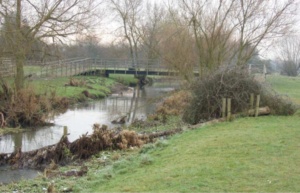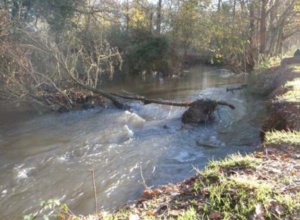
The past approach to stop flooding was to maintain rivers as water conduits, speeding water away by straightening them, removing weed growth and any debris. Fairly recently it was realised this was causing worse flooding in the high population areas in downstream towns and cities. Keep Aldershot dry, flood a few houses in Yateley and many more in Henley.
Todays approach looks to “slow the flow”, keeping water upstream as long as possible in areas where it will do least damage. Not easy in these days of high winter rain and heavy summer storms.
The Blackwater River, a history
The River Blackwater runs through an urban, managed and heavily used landscape. Large areas of the flood plain have been built on, both making it at risk of flooding and, along with the all the other hard surfaces in the wider catchment, draining rainwater quickly into the river making levels rise fast. Not only is there few areas to hold water but substantial part of the existing channel has been being modified or moved over the destroying its habitats.
To address this, areas of remaining flood plain have been preserved and even lowered to increase capacity (e.g. Hawley Meadows), and public greenspaces are managed as sponges e.g. (Tice’s Meadow, Southwood Park).
Trees regularly fall into the river. In the past when a tree fell in the river the response was to remove it as quickly as possible, to prevent a blockage but this speeds the flow.
It is now recognised that wood is a natural part of life in a healthy river, not only helping to “slow the flow” but creating diversity of water flows, producing clean gravel, sheltered areas and even an important food source. But for much of it’s length, the urbanised Blackwater cannot be left to ‘nature’s course’, a blockage at the wrong place could create flooding of roads or housing.
Trees that fall into the River Blackwater are assessed and wherever possible, if they pose no risk of flooding or unwanted erosion, they are retained and monitored rather than removed.
The Benefits of Large Woody Debris (LWD)
Essentially, large woody debris introduces diversity into a river channel. It affects river flow, causing localised changes in water velocity which typically result in:
Higher water velocity downstream of woody debris causes:
- A scour pool which itself creates a downstream gravel bank
Lower water velocity upstream which:
- Leads to silt deposition and creates silt benches
- Removing fine silt from the river and helps to prevent gravels from becoming silted over.
These varying water flows, together with the woody debris itself, introduce new habitats to the river channel which enable the river to support a much greater variety of wildlife.
- Scours / gravel banks improve the water quality for spawning fish.
- Areas of silt build up are colonised by emergent vegetation, increasing the amount of marginal habitat
Examples in the Blackwater Valley
There are great examples of woody debris improving the river at sites across the Blackwater Valley. Keep your eyes out when walking by the river at Frimley Hatches, Shawfield in Aldershot or Hawley Meadows.